12 April 2026 · 7 min read
Joy is not a reward
In the leadership conversations I host, joy is often the last topic raised and the first to be dismissed. It sounds, to the executive ear, slightly unserious — adjacent to wellbeing, perhaps, but not quite operational. There is a tacit hierarchy in most boardrooms: strategy, then performance, then culture, and somewhere far below, if we have time, the human texture of how it actually feels to do the work.
I have come to think this framing is precisely backwards. Joy is not the reward we permit ourselves once a quarter is closed or a transformation has landed. It is the condition under which sustained, high-quality work is even possible. Treated as a reward, joy is always deferred. Treated as a condition, it becomes a discipline — something we cultivate the way we cultivate fitness or financial literacy.
What I notice in the leaders I coach is that the absence of joy is rarely the absence of success. It is the absence of meaning made visible. Many of them are, by every external measure, succeeding. They are also, quietly, beginning to wonder what the next decade is for. That question is not a luxury question. It is the question that determines whether a senior leader can sustain another ten years of demanding work without becoming someone their younger self would not recognise.
There is also a quieter cost. Leaders who have lost contact with their own joy tend to under-invest in the joy of the people they lead. Not deliberately — they would be horrified to be told so — but in small, accumulating ways. Meetings become transactional. Recognition becomes rare. The texture of belonging in the team begins to thin. Performance follows, eventually, but it follows the texture, not the other way around.
I want to draw a careful distinction here. Joy, as I am using the word, is not the same as happiness, and it is certainly not the same as cheerfulness. Happiness is a mood. Cheerfulness is a manner. Joy is the sustained sense that what you are doing matters to you, that the people around you matter to you, and that you are not having to pretend otherwise. It can coexist with grief, with pressure, with the genuine difficulty of senior work.
The Joy Series exists to make that meaning legible again — to give senior people a serious place to discuss something they have been told, implicitly, is not serious at all. It is a curated conversation, not a workshop, and not a confessional. We sit together, we name what is actually animating us, and we look at what would need to be true for that to become more than a private feeling.
What surprises me, again and again, is how quickly the conversation deepens once the framing is granted. Within an hour, leaders who began the evening visibly braced are speaking with a directness they rarely allow themselves in their day jobs. The room itself becomes evidence: this is not soft work. This is the work underneath the work.
If you are a senior leader reading this, I would ask you one question. When was the last time you described what you do for a living in a sentence that included the word you would actually use, in private, for what makes it worth doing? If that sentence is hard to find, it is not because the work has stopped mattering. It is because we have stopped giving ourselves permission to say so.
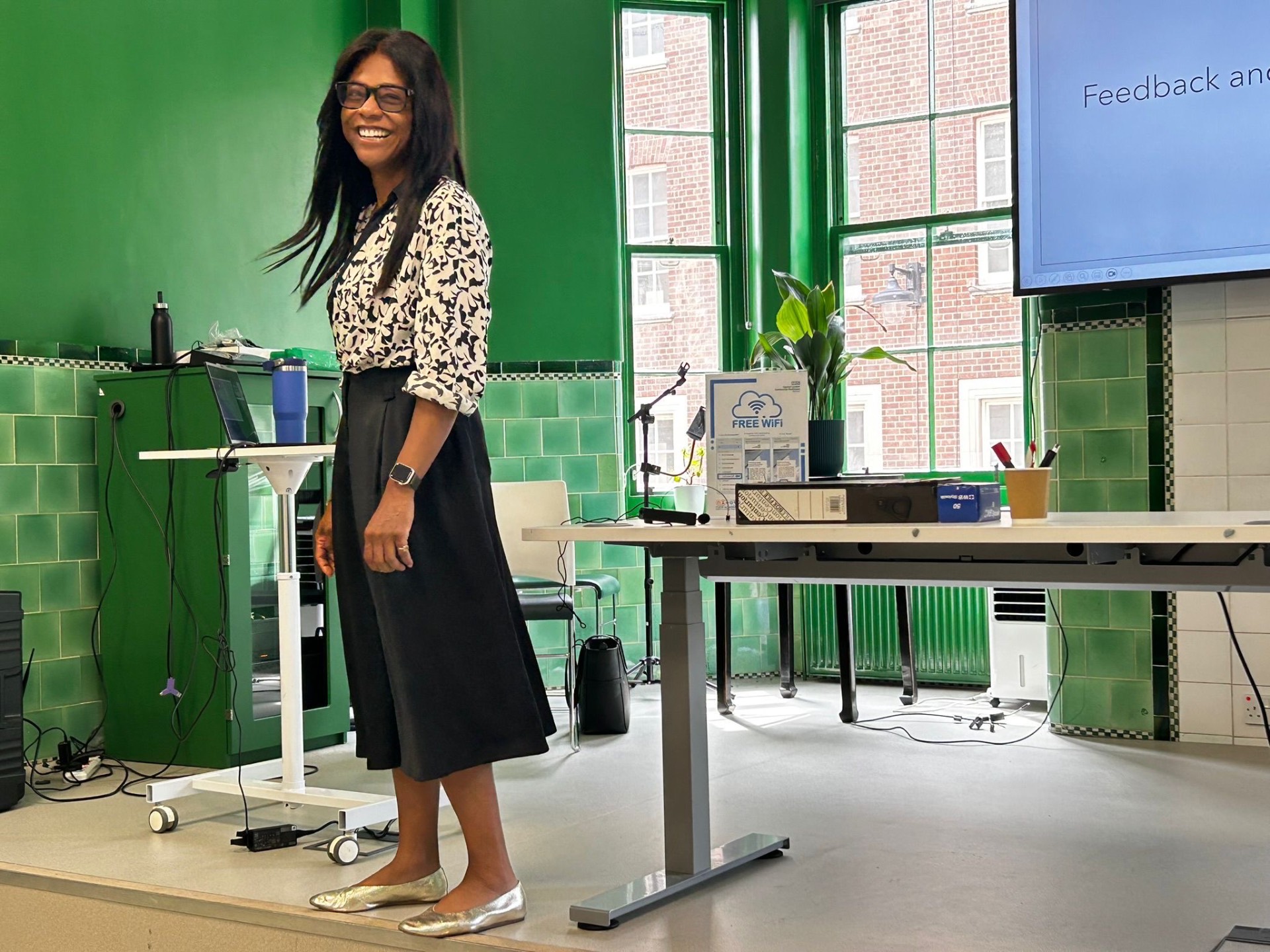
Janine in action
Your next step
What would change if joy had a place in your work?
Executive team interventions
Bring joy into a meaningful team conversation: a bespoke workshop exploring connection, culture and what helps people thrive alongside the demands of the work.
Explore team interventionsExecutive coaching
Explore what energises you, what has become crowded out, and how you want to lead — without waiting for the work to be finished first.
Explore executive coaching