27 September 2026 · 6 min read
Becoming a Reiki Master Teacher
Some achievements announce themselves the moment they land. This one I have been holding quietly for a while, and I want to give it its proper welcome: at the end of the summer I completed my Reiki Master Teacher accreditation. It is the highest level of training in the Reiki tradition — the level at which you are entrusted to pass the practice on to others — and it has been years in the making, woven in and around the Doctorate, the coaching practice, the courses and a very full family life.
I am proud of it. I will say that plainly, because I think women in particular are taught to soften the words. I am proud of it, and I did not set out to collect it. There was no professional development plan that pointed here. It was a practice that started as a curiosity, became a discipline, and somewhere along the way became part of who I am. The word master sits heavily when you first hear it — it does not mean arrived, nothing worth doing does. It means entrusted. It means the learning is now mine to carry, and mine to give away.
So what is Reiki, for those who have only heard the word? It is a Japanese practice of gentle, non-invasive energy work, developed by Mikao Usui in the early twentieth century. The name itself carries the idea: Rei, often rendered as universal or spiritual, and Ki — the life energy that runs through and around us. A treatment is disarmingly simple. You rest, clothed, on a treatment couch or a chair, and the practitioner places their hands lightly on or just above the body and simply holds there, still. There is no massage, no manipulation, no belief system required of you. People describe warmth, deep relaxation, a settling of the nervous system, and sometimes nothing at all except a very good night's sleep afterwards. That is also fine. The practice does not ask you to believe anything; it asks you to rest.
Training happens in levels, and each level is a deepening rather than a shortcut. First degree teaches the foundations and the self-practice. Second degree deepens the work and extends it to others. Then come the master levels, which include the traditions and the responsibility of teaching. To reach Master Teacher means years of receiving treatments, years of daily practice, supervised mentoring, and a lineage that traces back through my teachers to Usui himself. It is, in its own quiet way, as rigorous as anything else I have studied — just rigorous about stillness instead of speed.
Which brings me to why I believe it belongs in the conversation about leadership, because I know how it might otherwise read from the outside. The boardrooms and executive suites I have spent nearly two decades in are not calm places. They are full of urgency, scrutiny, and people carrying more than they can say. And the single most useful thing a person can bring into that kind of room is a regulated nervous system — a genuine, embodied steadiness that others can borrow from without either of us naming it.
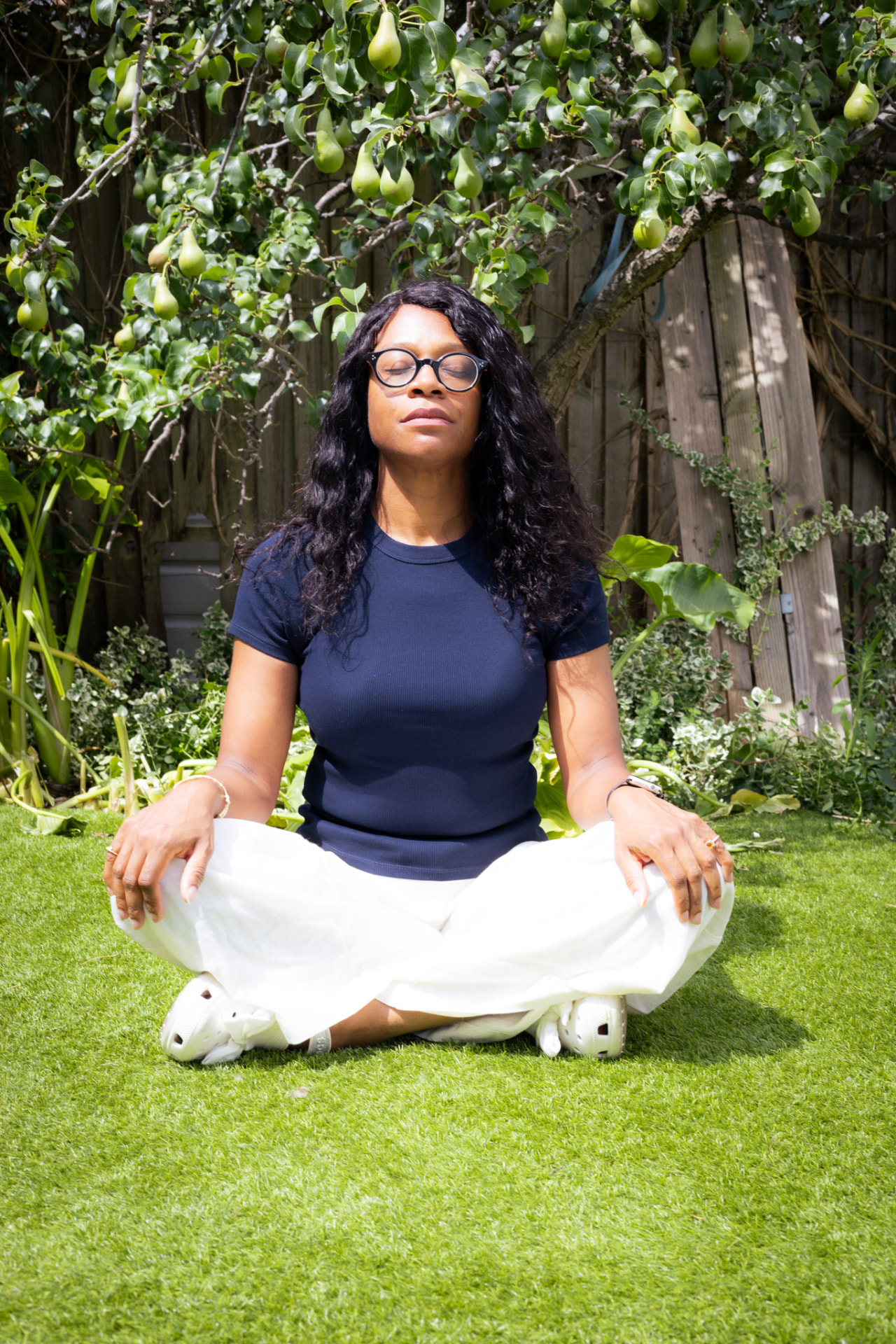
Reiki practice trains exactly that. Holding your hands still over another person for an hour, with attention and without an agenda, is profound training in the thing executives find hardest: being present without needing to fix, prove or perform. You learn to stay with discomfort. You learn to let the body settle before you act. You learn that most rooms do not need you to be louder — they need you to be more settled than the situation. When a leader walks into a crisis carrying that quality, the room recalibrates around them. I have watched it happen more times than I can count.
I want to be precise about the boundaries, because precision is part of the practice. In my coaching and my meditation teaching, the work is secular, evidence-informed and offered, never prescribed. Nobody is given a treatment in a coaching session; nobody is asked to adopt my beliefs. What crosses the boundary is not the technique but the capacity it built in me: the stillness, the clean attention, the comfort with what cannot be hurried. That capacity shows up in every session I run, whether or not anyone in the room knows where it came from.
And the honest answer to what comes next is: I do not know yet, and I like it that way. There are one or two threads I am quietly following — deepening the embodied side of my coaching work, and exploring where energy practice and coaching supervision might enrich each other. I will let them ripen before I name them. What I do know is that I do not experience growth and consolidation as rivals. Constant growth, exploration and consolidation go hand in hand: the exploring is what keeps the practice alive, and the consolidating is what makes the exploring safe. The accreditation is not a summit. It is a foundation with a very good view.
So this is me, marking a personal milestone out loud. A quiet, hot summer, a treatment couch, a lot of early mornings, and a piece of paper that represents a promise I made to myself years ago. Master Teacher. I am smiling as I finally type it.
Janine in action